Edition: 2026
Pages: 160
Series: IR/L
ISBN: 9788858162125
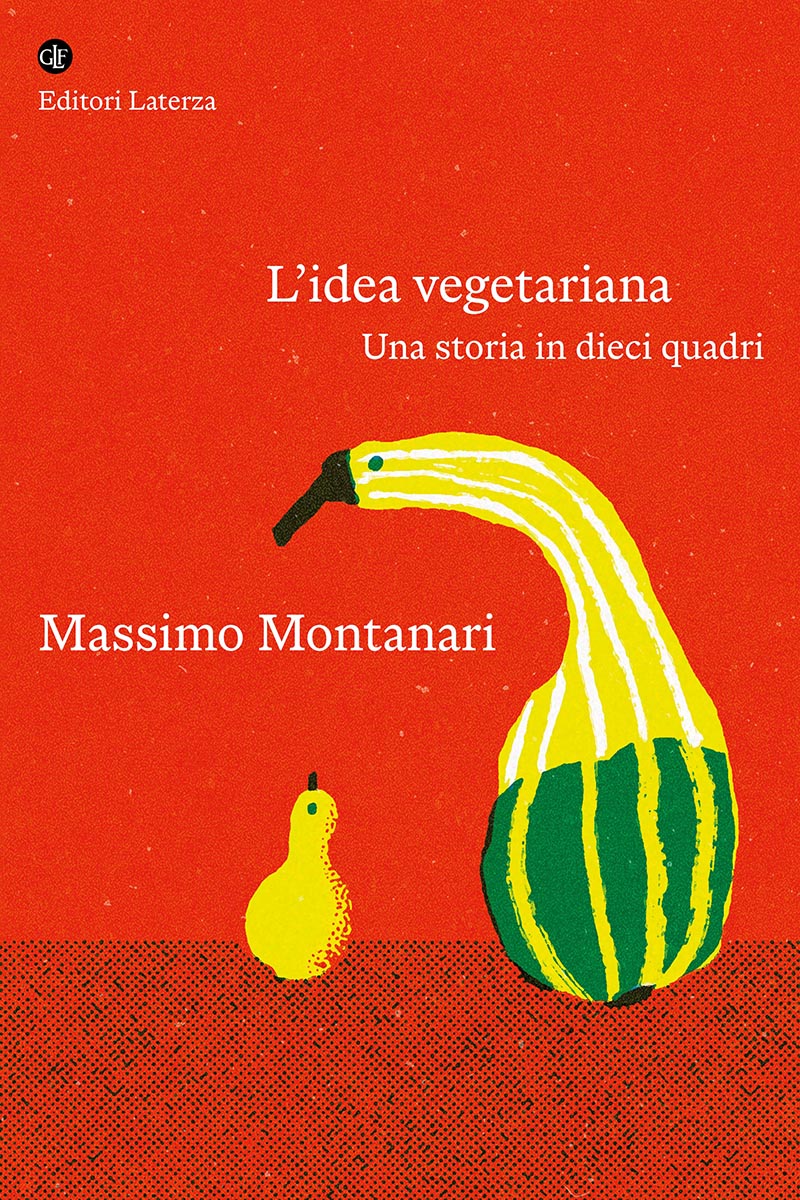
A Short History of Vegetarian Thought
RIGHTS SOLD TO:
Wagenbach (German); Acantilado (world Spanish); NLO (Russian); Zigurate (Portuguese in Portugal); Korean Studies Information (Korean)
A brief, erudite, and elegant cultural history of vegetarianism.
Why do human beings, who are born omnivores, choose to become vegetarian? They have done so since the earliest civilizations, and their reasons are many — and surprising. Massimo Montanari, Italy’s leading food historian, far from writing a manifesto, traces ten distinct arguments that have driven the vegetarian choice across 2,500 years, each with its own logic and its own history: the refusal to kill, the fear of flesh as corruption, religious penance, the pursuit of health, anatomical theory, the contestation of power, animal rights, ecology, world hunger, and, the most overlooked reason of all: pleasure. The result is a book peopled by an unexpected cast of characters. Pythagoras and Peter Singer end up arguing the same case for very different reasons. Gandhi discovers vegetarianism as a political weapon in a London vegetarian restaurant. Dr. Kellogg invents corn flakes to suppress sexual desire. Medieval Cathars refuse meat as an act of cosmic dualism, while Voltaire mocks Descartes through the mouth of a capon awaiting slaughter. Behind every one of these stories lies the conviction that has run through all of Montanari’s work: that food is never merely nutrition, but culture — a concentrate of what we have thought, believed, and wanted to be. In short, to decide what (not) to eat is also to decide who we are.
The author

Massimo Montanari
Massimo Montanari is Italy’s foremost food historian. He teaches History of Food at the University of Bologna, where he founded the Master’s programme in History and Culture of Food. His many books published with Laterza — including Cibo come cultura, La fame e l’abbondanza and Il Mito delle origini. Breve storia degli spaghetti al pomodoro — have been translated into numerous languages worldwide.
Scopri l'autore